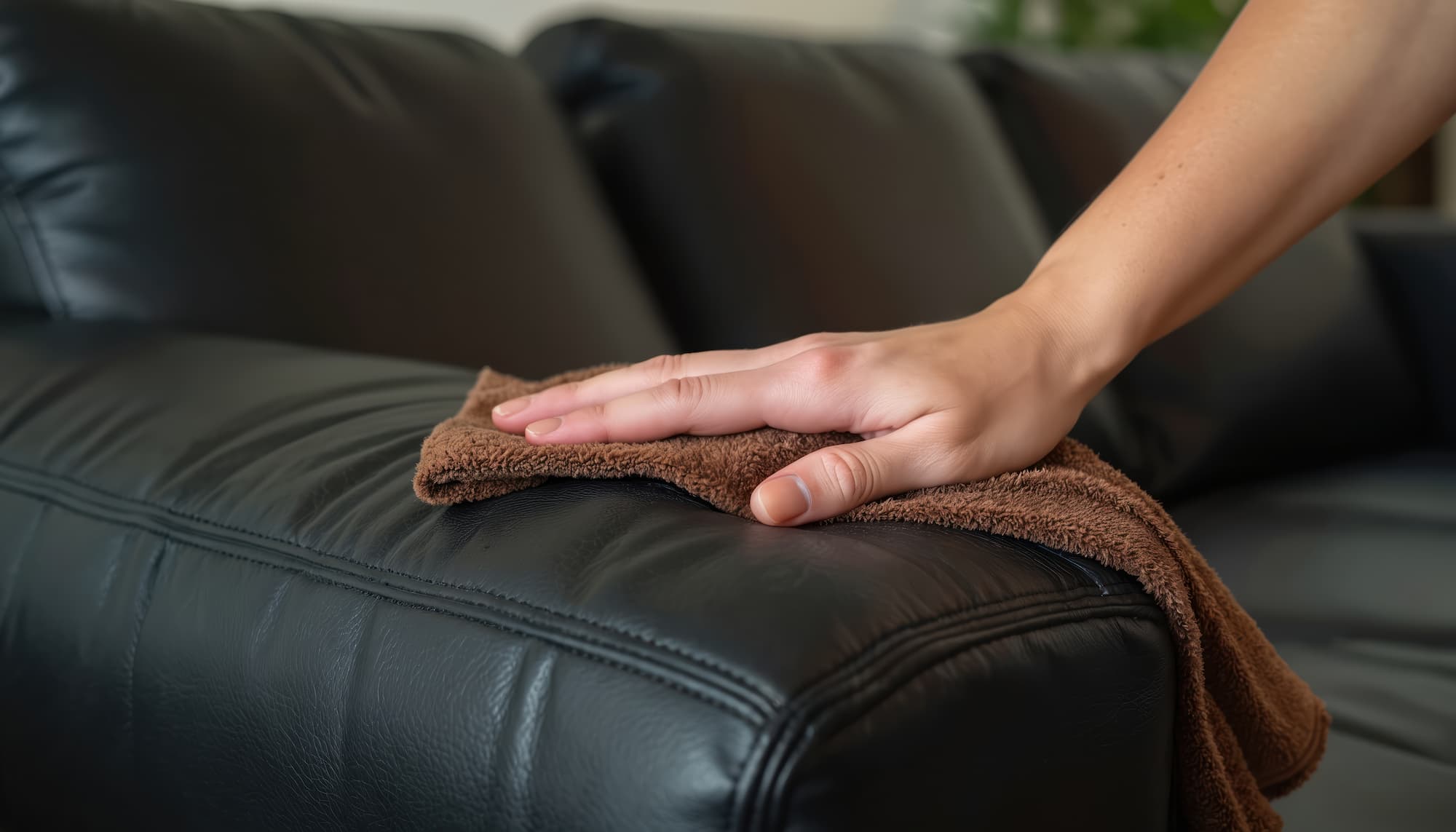
“Leather” has become one of the most misused words in the furniture industry.
Today’s market is flooded with materials that look like leather, feel like leather, and are marketed as leather — but in reality, are anything but. Between synthetic blends, heavily processed hides, and plastic-based alternatives labeled as “vegan” or “performance leather,” it has become increasingly difficult for consumers to know what they are actually buying.
Over the years, we’ve inspected countless pieces of furniture and have seen it all:
- Sofas with real leather only on the seats and synthetic material everywhere else
- Products advertised as “genuine leather” that are so heavily processed they’ve lost the qualities that make leather valuable in the first place
- Plastic-based materials marketed as environmentally friendly “vegan” alternatives
The confusion isn’t accidental. Many of these materials are engineered to mimic the appearance of leather at a lower cost. And while the technology behind them can be impressive, the performance over time tells a very different story.
True leather is a natural material. It breathes. It adapts. It softens with use. It can be repaired. It develops character. Synthetic substitutes, on the other hand, are manufactured products designed to imitate those qualities — often with adhesives, coatings, and plastics layered over fabric backings.
Understanding these differences matters. Because what looks similar on a showroom floor can perform very differently in your home five years from now and the care and maintenance are different, which I will go into below..
pros and cons of the top five most popular faux leather products.
1. Bonded Leather (Reconstituted Leather)
What it is:
Leather dust and scraps that are ground up, mixed with polyurethane or latex, and bonded onto a fabric backing.
Pros:
- Lower price point
- Uniform appearance
- Initially feels somewhat like leather
Cons:
- Prone to peeling and flaking
- Short lifespan (often 2–5 years with regular use)
- Cannot be repaired like genuine leather
- Often misleadingly marketed
Bottom line:
Bonded leather is closer to plastic than to leather. It is typically the first material to fail on a sofa.
2. PU Leather (Polyurethane Leather)
What it is:
A plastic coating (polyurethane) applied to a fabric backing. No animal hide content.
Pros:
- Affordable
- Wide range of colors and finishes
- Easy to wipe clean
Cons:
- Does not breathe
- Cracks and peels over time
- Not biodegradable
- Lacks the depth and aging character of leather
Bottom line:
PU leather is plastic engineered to look like leather. It may work for short-term or low-use applications, but it will not age gracefully.
3. PVC Leather (Vinyl)
What it is:
Polyvinyl chloride (PVC) applied to fabric with plasticizers added to soften it.
Pros:
- Very inexpensive
- Water resistant
- Often used in commercial settings
Cons:
- Feels stiff and artificial
- Can crack in temperature changes
- Contains more chemicals than PU
- Environmental concerns during production and disposal
Bottom line:
Durable in certain environments, but far from the comfort, breathability, or longevity of real leather.
4. Vegan Leather (Plant-Based or Synthetic)
What it is:
A marketing term. Most “vegan leather” is PU or PVC. Some newer versions incorporate plant fibers, but they still require synthetic binders.
Pros:
- Animal-free
- Modern aesthetic appeal
- Growing innovation in materials
Cons:
- Often primarily plastic
- Limited long-term performance data
- Does not repair or age like genuine leather
- Sustainability claims can be misleading
Bottom line:
While innovation is exciting, most vegan leathers on the market today are still largely synthetic and do not match the durability of high-quality leather.
5. Microfiber / Performance Fabric
What it is:
Tightly woven synthetic fibers designed to mimic suede or leather.
Pros:
- Stain resistant
- Soft and comfortable
- Durable in high-traffic homes
Cons:
- Not leather at all
- Can pill over time
- Does not develop patina
- Synthetic base material
Bottom line:
A solid fabric option — but it should never be marketed as leather.
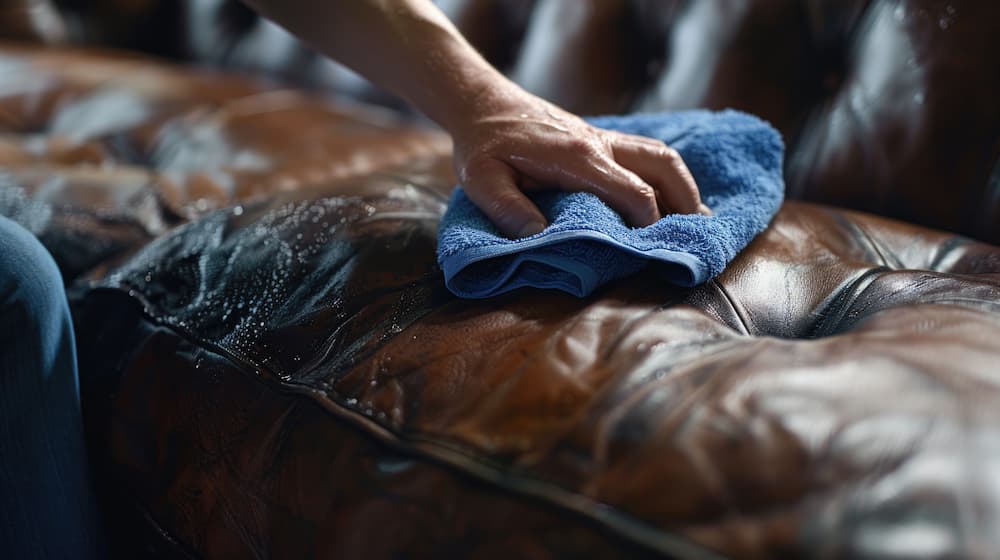
How to Care for Faux Leather vs. Genuine Leather
One of the biggest misconceptions in the market is that all “leather-looking” materials are cared for the same way. They are not.
Using the wrong products can accelerate failure and damage color — and treating real leather like plastic can dry it out and permanently damage it.
Caring for Bonded Leather
Bonded leather cannot be conditioned like genuine leather because the surface is essentially plastic.
Do:
- Wipe with a soft, slightly damp cloth
- Clean spills immediately
- Keep out of direct sunlight
Do Not:
- Use leather conditioners (they won’t absorb)
- Scrub aggressively
- Expect repair once peeling begins
Once bonded leather starts flaking, there is no true fix — only temporary cosmetic solutions.
Caring for PU or PVC (Synthetic / Vegan Leather)
These materials are non-porous plastics.
Do:
- Clean with mild soap and water
- Use a soft microfiber cloth
- Keep away from heat sources
Do Not:
- Use alcohol-based cleaners
- Use abrasive pads
- Apply leather oils or conditioners
Conditioners sit on the surface and can actually break down adhesives over time.
Caring for Microfiber / Performance Fabrics
Although sometimes marketed alongside leather, these are fabrics.
Do:
- Follow manufacturer cleaning codes
- Vacuum regularly
- Blot stains — don’t rub
Do Not:
- Oversaturate with water
- Use stiff brushes
Caring for Genuine Leather
Real leather behaves very differently.
Do:
- Dust and wipe regularly with a dry or lightly damp cloth
- Condition periodically with a quality leather conditioner
- Keep out of prolonged direct sunlight
- Address spills quickly
Leather loses moisture over time. Conditioning replenishes natural oils, preventing cracking and preserving flexibility.
Unlike synthetic materials, genuine leather improves with proper care. Minor scratches can be minimized. Dryness can often be corrected. Surface wear becomes patina — not peeling.
The Care Difference Is the Longevity Difference
Here’s the simple truth:
- Faux leather requires maintenance to delay failure.
- Genuine leather requires care to enhance longevity.
Synthetic materials are engineered to look good upfront. Real leather is built to age well.
When you’re deciding what to purchase, don’t just consider how it looks today — consider how it will perform five, ten, or fifteen years from now.
Because in furniture — just like in life — what something is made of always matters.
And all leather is definitely not created equal.