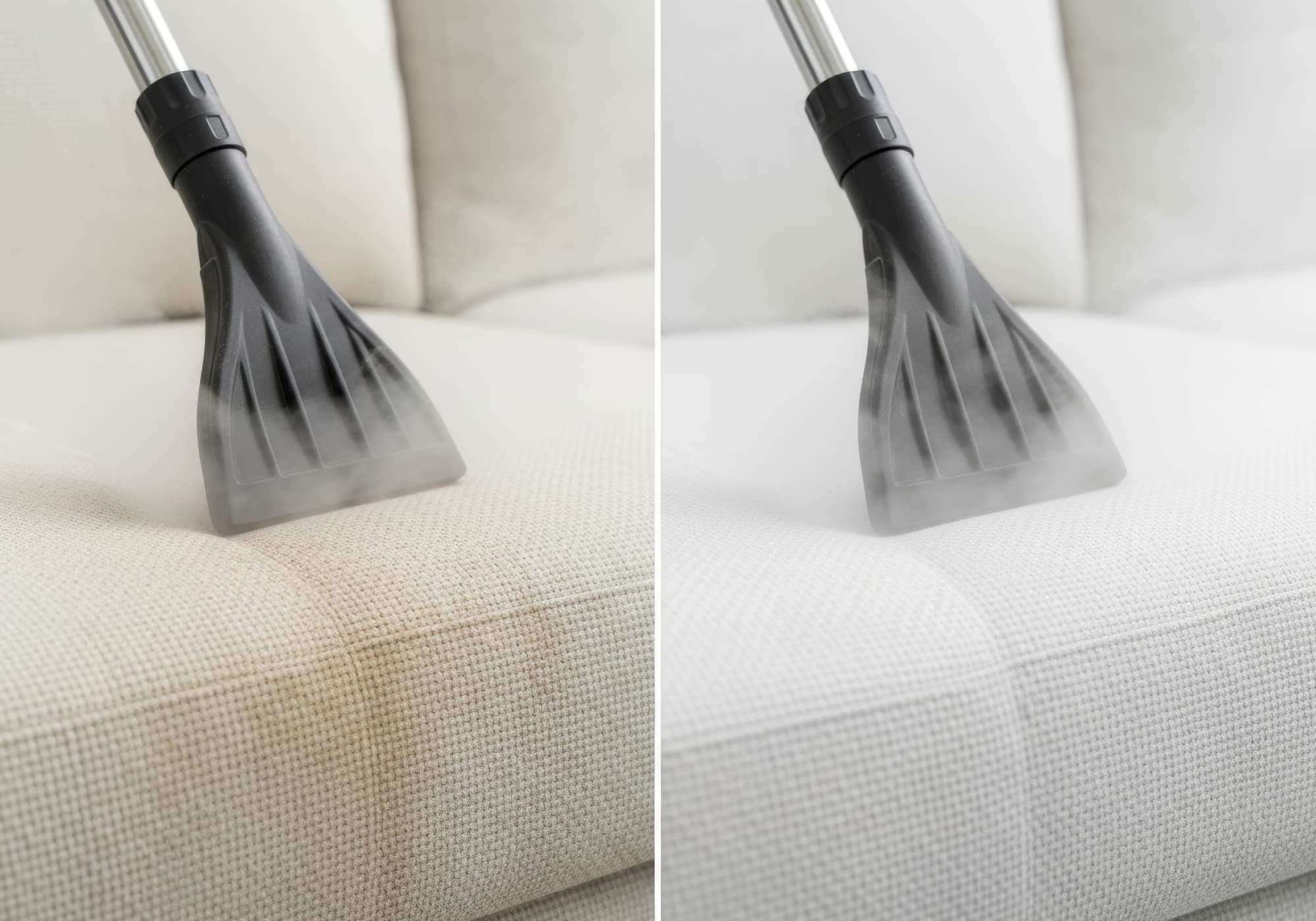
Cellulosic Browning Explained
Shortly after we opened our first rug washing facility (just months after our son — now 9 — was born), we had a customer call in a panic. We had just completed an in-home cleaning of her tufted linen sofa… and now it was turning yellow — with the buttons even showing orange discoloration!
Situations like this are stressful for homeowners and never fun to deal with — but the good news is: it’s almost always correctable.
What she was experiencing is called cellulosic browning, caused by improper drying and likely over-wetting of the fabric. In her case, there was also a secondary issue — rust bleeding from the metal buttons beneath the fabric.
And this highlights one of the biggest challenges in professional upholstery cleaning:
The difference between a professional and an amateur often comes down to moisture control.
Too little water, and the fabric doesn’t get fully cleaned.Too much water, and you risk browning, shrinkage, or even structural damage.
What Is Cellulosic Browning?
Cellulosic browning occurs in natural fibers like cotton, linen, rayon, and jute — materials derived from plants.
These fibers contain natural sugars. When they become overly wet and dry too slowly, those sugars can wick to the surface of the fabric. As they oxidize, they leave behind yellow or brown discoloration.
This is why you’ll often see:
- Yellowing across cushions or arms
- Browning along seams or edges
- Uneven discoloration after cleaning
It’s not dirt coming back — it’s a chemical reaction within the fabric itself.
What Causes It?
The most common causes include:
- Over-wetting the fabric during cleaning
- Slow drying conditions (high humidity, poor airflow)
- Improper cleaning techniques or equipment
- Wicking from deep within cushions or padding
- Metal components rusting underneath fabric (like staples or buttons)
White or light-colored furniture makes this especially noticeable — which is why it feels so alarming.
How to Prevent It
Prevention comes down to proper technique and drying:
- Use low-moisture cleaning methods when appropriate
- Avoid saturating the fabric unnecessarily
- Ensure strong airflow (fans, air movers) during and after cleaning
- Maintain controlled indoor humidity
- Use professional-grade equipment with proper extraction power
- Pre-test fabrics to identify cellulosic risk
In short: clean smart, and dry fast.
How to Correct It
If your sofa has already turned yellow — don’t panic.
Cellulosic browning can typically be corrected with:
- Specialized acidic rinses or browning treatments
- Professional re-cleaning with controlled moisture
- Targeted stain correction techniques
- Addressing any rust stains separately
However, timing matters. The sooner it’s treated, the better the outcome.
Final Thoughts
If your white sofa is turning yellow after cleaning, it doesn’t mean it’s ruined — it just means something went wrong in the process.
This is a perfect example of why upholstery cleaning isn’t just about making things look good — it’s about understanding fibers, chemistry, and moisture control.
When done correctly, your furniture should come out cleaner, brighter, and stay that way.