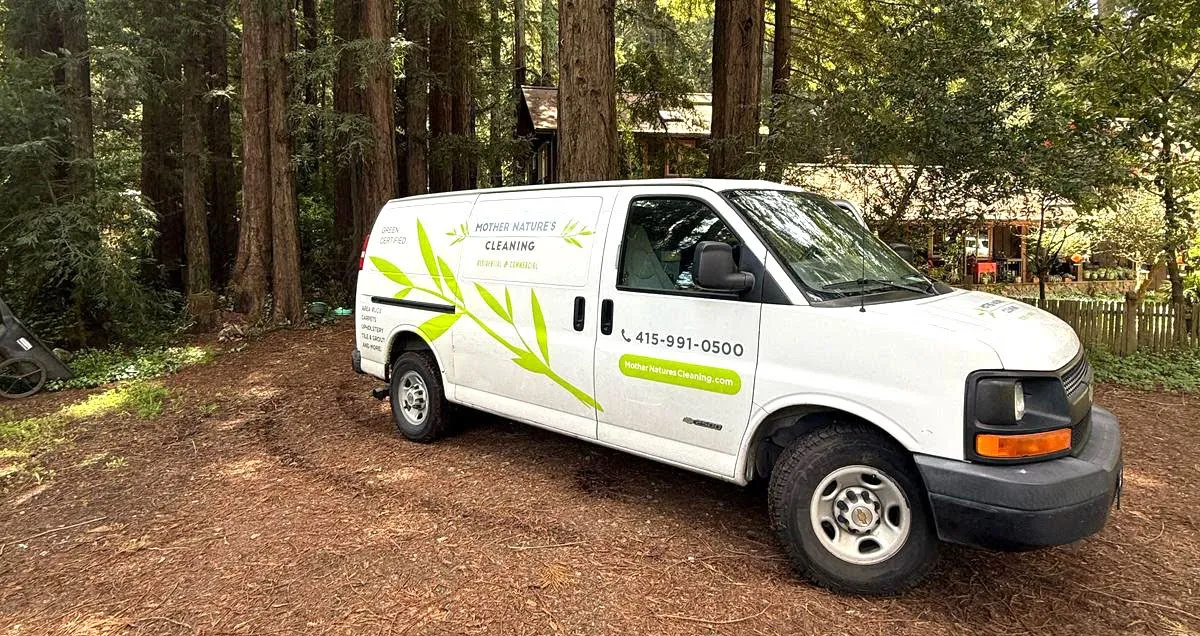
Check the floor first
We look at the wear layer, find out how it's installed, and test in a low-traffic corner before we commit to a method


LVP that looks dull after mopping usually isn't dirty. It's coated in residue. We take that off and tell you honestly what cleaning can and can't fix on a vinyl floor.
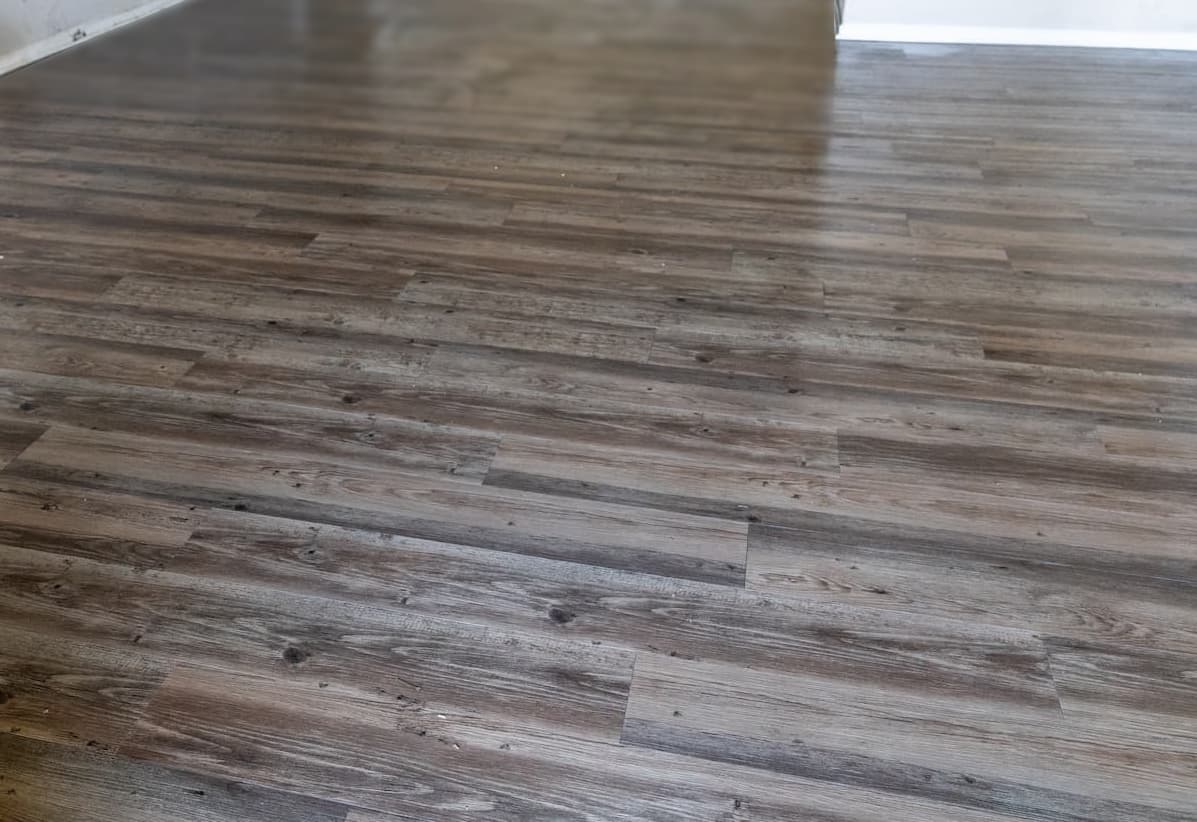


People call us because their vinyl plank looks cloudy, dull or streaky no matter how often they mop it. In a lot of those homes, dirt isn't what's making it look that way.
LVP has a clear wear layer on top, and that surface is designed to be cleaned with water and a pH-neutral cleaner. Almost everything else leaves something behind. Mop-and-shine products, dish soap, vinegar, oil soaps and hard water all build a film on the wear layer. Mohawk's own care guide tells owners to avoid abrasive and mop-and-shine products, and Armstrong says mop-and-shine can leave a dull film on its Luxe Plank line.
So the floor gets cloudier the more you clean it. Each pass adds a thin layer over the last one.
There's a second thing going on. Most LVP has an embossed texture pressed into it to look like wood grain, and soil settles into that texture. A flat mop glides over the top of it. That's why a floor can feel clean, look clean in low light, then look gray as soon as the afternoon sun comes across it.
What we do is get the residue and the embedded soil off without putting anything new on.
Residue, embedded soil and a worn wear layer all look the same from standing height. They need different answers.
No wax, no mop-and-shine, no polish. The products manufacturers warn about are the ones causing the problem.
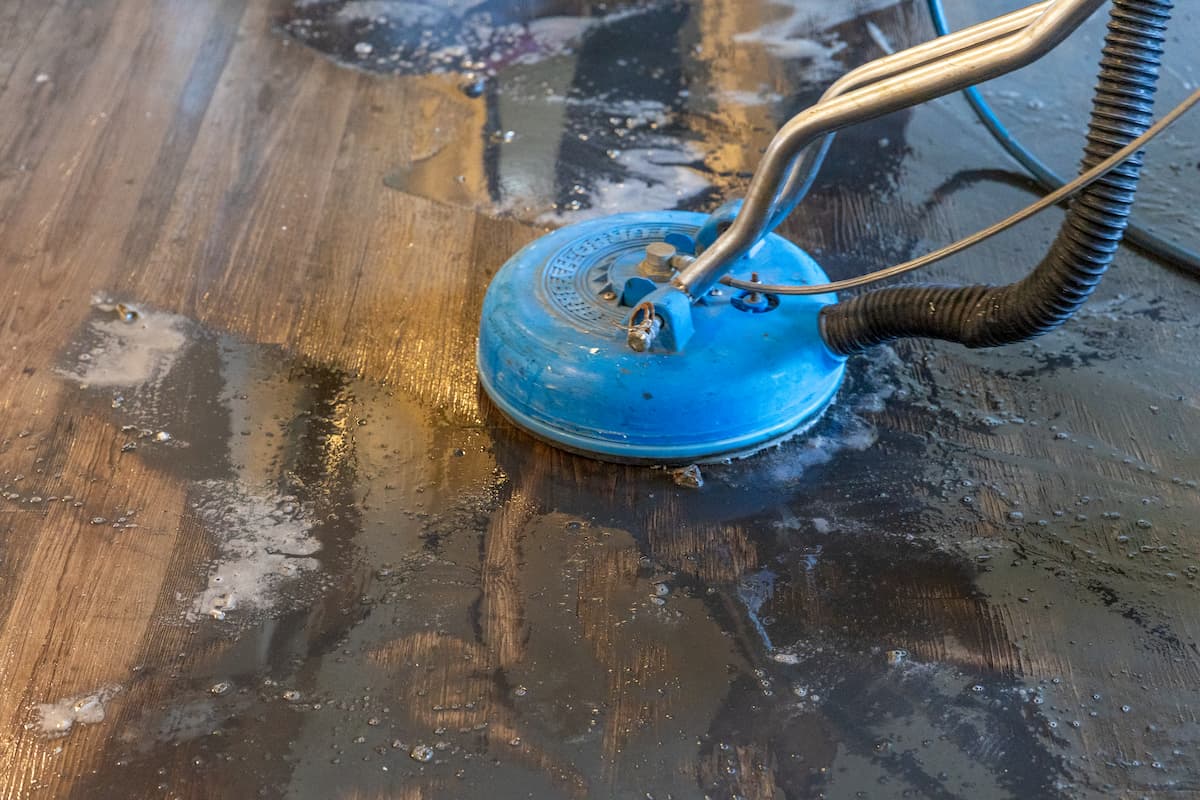
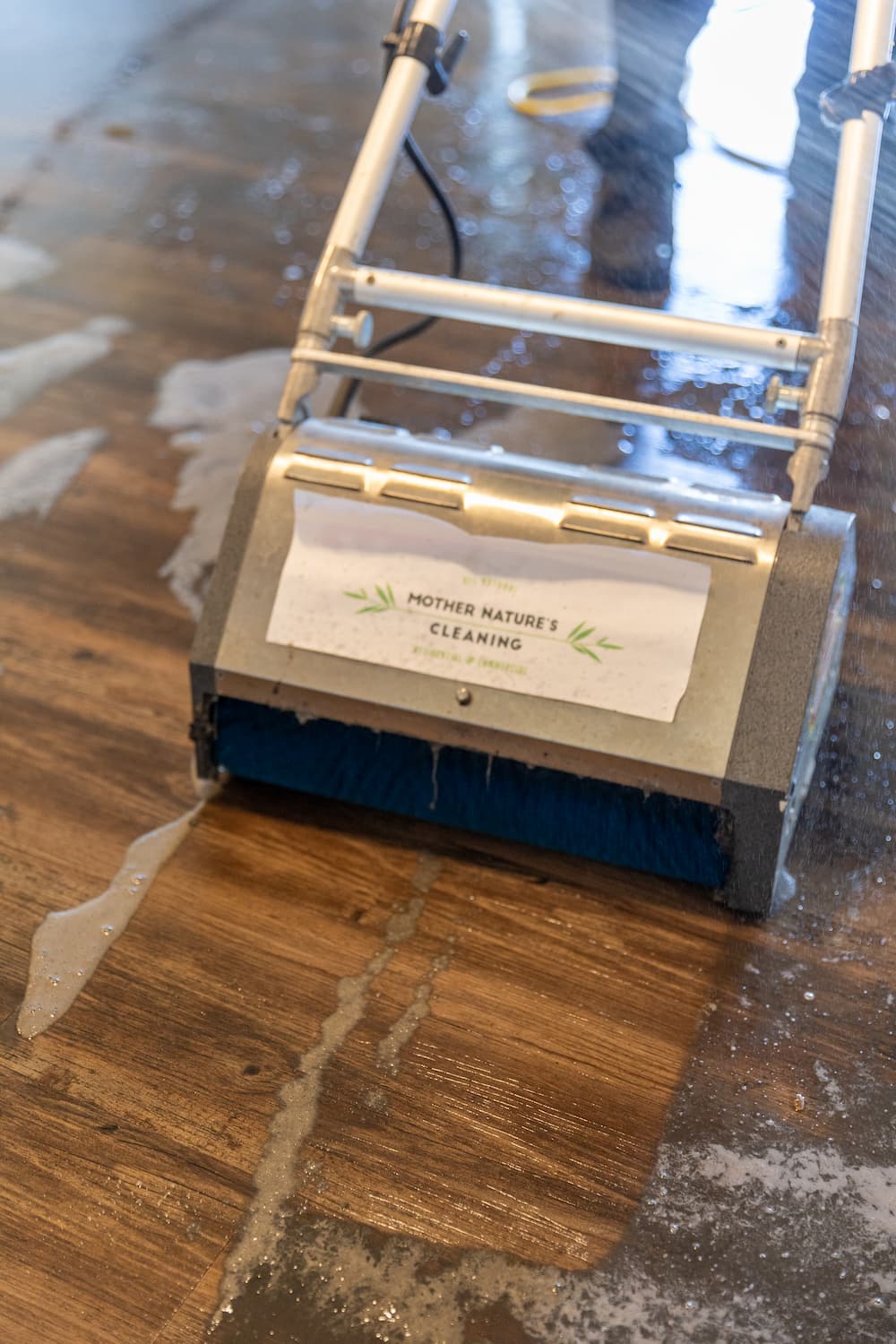
Our machine rinses and extracts in the same pass, so water never sits on the seams while we work.
If your floor is worn rather than dirty, cleaning won't fix it, and you'll hear that from us before you book rather than after you've paid.
We'd rather tell you before we arrive than after we've charged you.

Scratches and gouges that have cut into the wear layer

Cloudy film and streaking from mop-and-shine, soap and hard water
Worn patches where the wear layer has gone through and the printed layer shows
Soil packed into the embossed grain and the bevel between planks
Yellow or brown discoloration under rubber or latex backed mats, which goes into the floor rather than onto it
Grease haze in kitchens and around cooking areas
Fading or color change from years of direct sunlight
Scuff marks from shoes and furniture feet
Gaps between planks, lifting edges, or a plank that's come loose
Dull, flat-looking floors where the original sheen is buried under residue
Water damage underneath from a leak or a flood
Pet accidents and spills that have sat on the surface
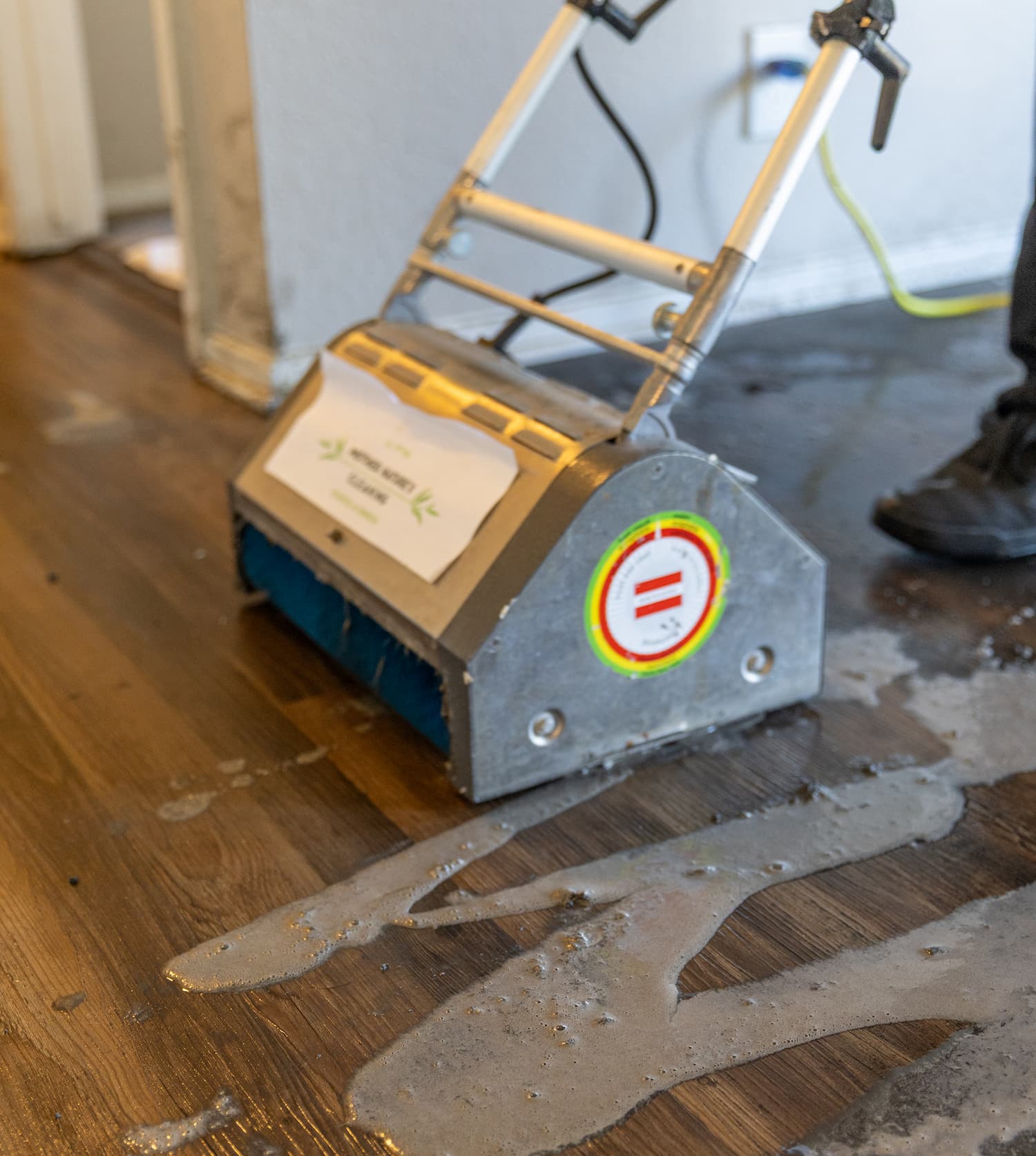
Most of the time we get it a long way back to its original luster. Sometimes not all the way.
If the dullness is residue, the difference is dramatic and it happens the same day. That's the common case. If the dullness is the wear layer itself being scratched up from years of grit underfoot, cleaning improves it but the scratches stay.
Here's the crux. Luxury vinyl cannot be sanded or refinished the way hardwood can. There's no way to cut a new surface. Once the wear layer is worn through, the plank gets replaced, which is a flooring contractor's job and not ours.
That's also why we're careful about coatings. Some vinyl floors accept a specific finish from their own manufacturer when the sheen has gone flat. Plenty don't, and COREtec tells owners to stay away from floor polish altogether. A coating on the wrong floor becomes a film that collects dirt and then has to be stripped off later. If you want more sheen, we'll check what your floor is before putting anything on it. Where your floor's manufacturer does recommend a finish, we can source that product and apply it on request.

We look at the wear layer, find out how it's installed, and test in a low-traffic corner before we commit to a method
Grit comes off first, with a vacuum rather than a beater bar. Grit under a scrubbing pad is what puts new scratches in a floor.
A pH-neutral solution goes down and gets time to break the residue and grease loose. The dwell time does most of the work.
A soft pad reaches into the embossed texture, and the machine rinses and pulls the water back in the same pass, so nothing is left standing on the floor. That matters more on vinyl than people expect, because the plank is waterproof but the seams and the subfloor underneath aren't.
Microfiber passes to finish, then we go through the floor with you, including anything that didn't come out and why.
Luxury vinyl is priced by the square foot, based on the size of the area, the type of vinyl and the condition. We confirm the price before we start.
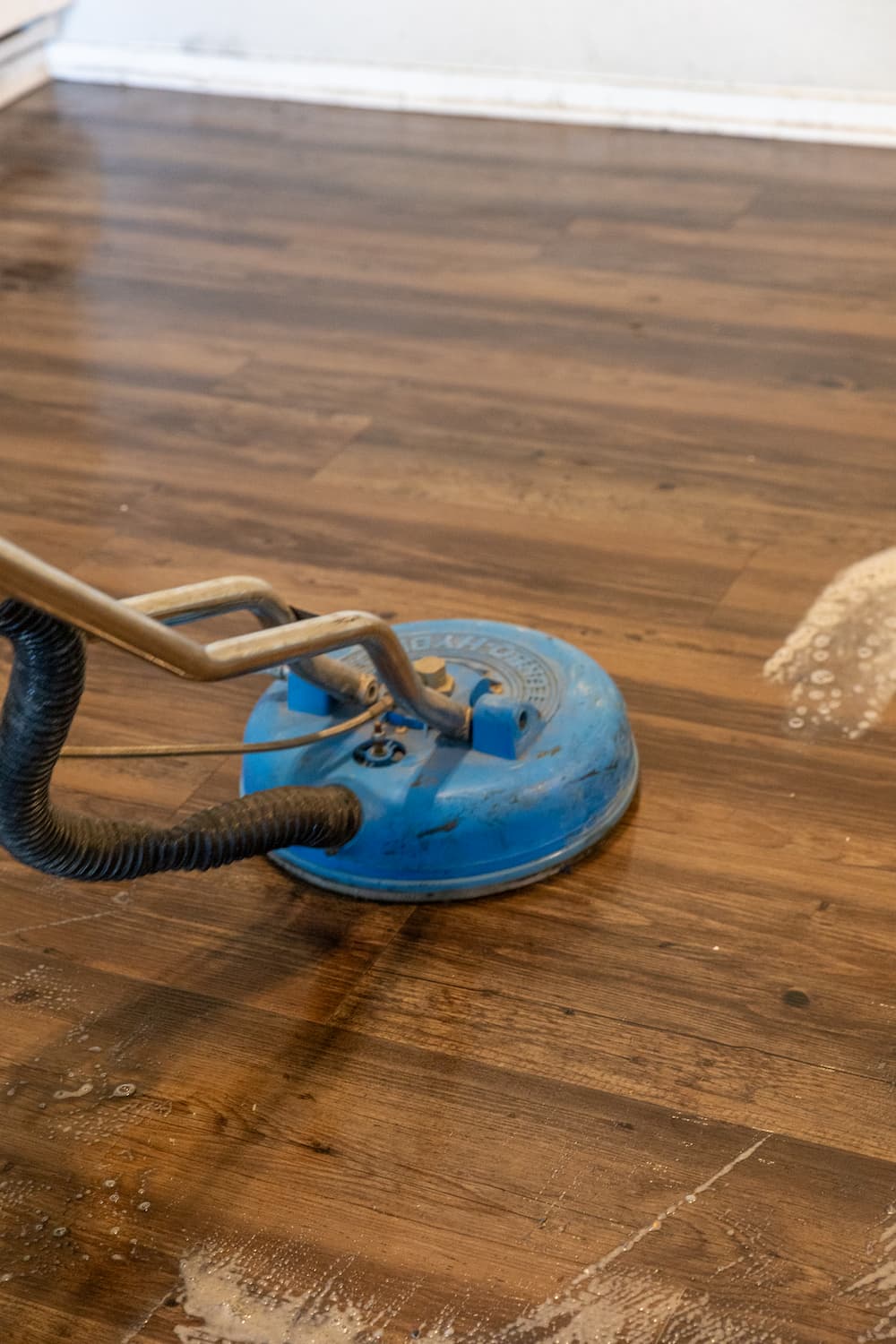
Larger areas priced per square foot. Heavy residue quoted after we look.
We cover San Francisco and the wider Bay Area for luxury vinyl plank cleaning. If you're not sure whether you're in range, call and ask.