

We have all been there. You are enjoying a quiet evening in your living room, and suddenly, disaster strikes. A rogue pen leaks, a marker slips, and suddenly there is a dark, terrifying ink stain on your beautiful, light-colored sofa.
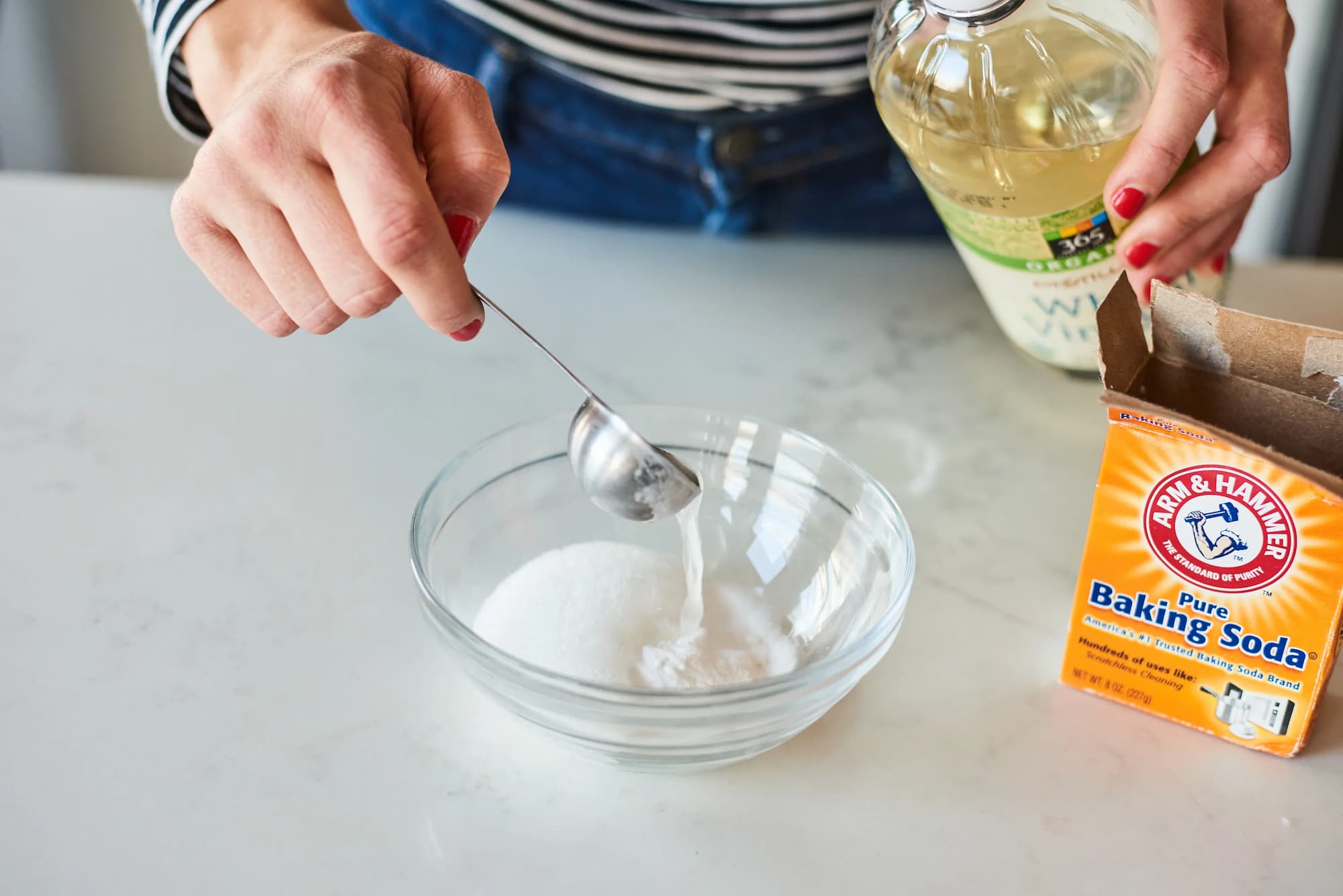
Panic sets in. You immediately grab your phone and type "how to remove ink from a couch" into the search bar. Within seconds, you are bombarded with TikTok videos and Pinterest graphics promising that you can magically erase any stain using items you already have in your kitchen pantry. Suddenly, you are playing basement chemist, mixing up a bubbling potion of white vinegar, rubbing alcohol, and baking soda.
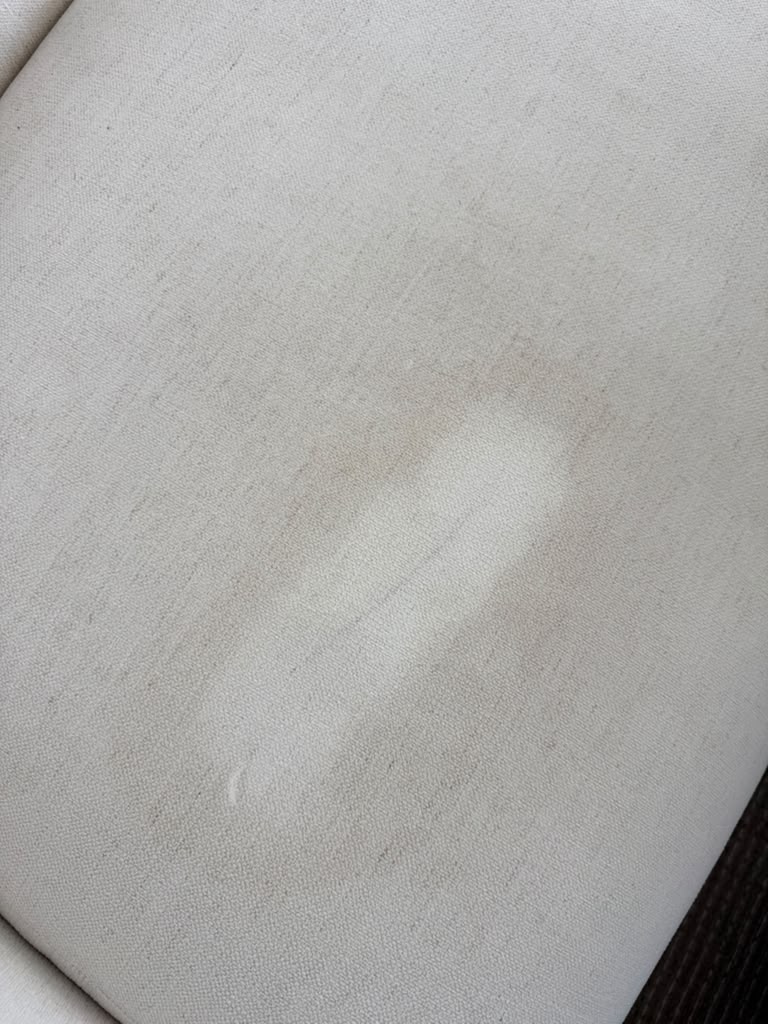
We recently received a distress call from a customer who lived this exact scenario. They were told by an online article that their ink stain was permanent unless they aggressively treated it with a homemade chemical cocktail. They threw the proverbial kitchen sink at it.
Here is the initial aftermath of that DIY chemistry experiment:
And here is what happened once the fabric finally dried:
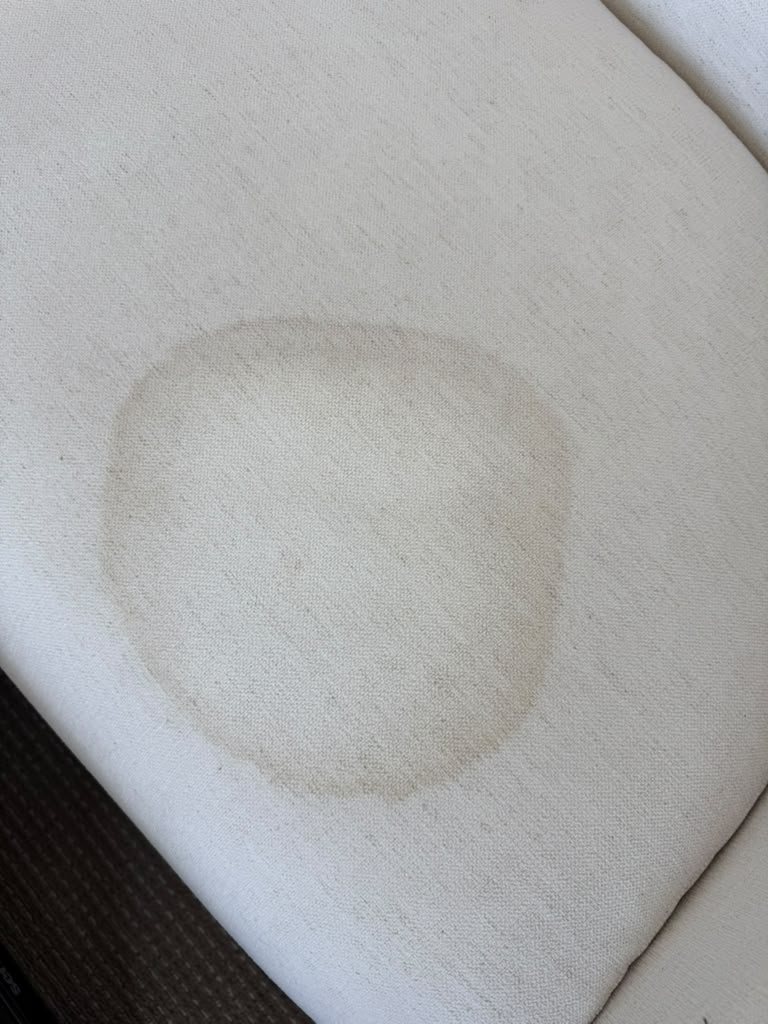
As you can clearly see, the DIY concoction didn't just fail to erase the ink; it created a massive, dark brown water ring that is exponentially larger and more noticeable than the original pen mark ever was.
Why does this happen? Here is the actual science behind why internet cleaning hacks fail on upholstery—and why you need to step away from the salad dressing ingredients.
1. The Volcano Effect Does Nothing for Stains
Remember making a paper-mâché volcano in middle school science class? You poured vinegar into baking soda, and it foamed up into a satisfying, bubbly mess. It looks like it’s doing something powerful.
However, let's look at the pH scale. Vinegar is an acid. Baking soda is a strongly alkaline base. When you mix these two ingredients together on your couch cushions, they undergo a chemical reaction that effectively neutralizes them both. That satisfying fizz is just the release of carbon dioxide. Once the bubbling stops, what you are left with is essentially just water and a little bit of sodium acetate (salt). You aren't actually breaking down the stain; you are just dumping salt water into your expensive furniture.
2. Alcohol Spreads the Problem
Rubbing alcohol is a powerful solvent. While it is true that alcohol can break down the binders in certain types of ink, pouring it directly onto your upholstery without professional extraction equipment is a recipe for disaster.
Instead of lifting the ink out of the fabric, the alcohol thins the ink into a liquid dye. Without a powerful suction to immediately extract that liquid, gravity takes over. The thinned ink is pushed deeper into the fabric backing and down into the foam padding of the couch. You might make the surface look slightly lighter, but you have fundamentally driven the stain deeper into the furniture's core.
3. The Dreaded Water Ring (Cellulosic Browning)
The giant, dark brown rings you see in the customer's photos are the result of over-wetting the fabric. Upholstery fabrics are incredibly complex, often woven with natural fibers like cotton, linen, viscose, or rayon.
When you dump a high volume of unformulated liquid onto these delicate textiles, two things happen. First, the liquid soaks down into the dirty foam padding, mixes with underlying dust and oils, and wicks back up to the surface as it dries. Second, natural cellulose fibers turn brown when exposed to high alkaline solutions (like un-neutralized baking soda) or when they are left wet for too long. This creates a harsh, dark watermark—known in the professional cleaning industry as cellulosic browning. Reversing this chemical burn requires highly specific, professional-grade acidic rinses and rapid drying techniques.
How to Actually Handle an Upholstery Emergency
Your furniture is not a kitchen counter. It requires precise pH levels, specialized textile cleansers, and controlled moisture extraction to be cleaned safely. When a spill happens, follow these triage steps:
- Breathe and Grab a Towel: Do not panic. Grab a clean, dry, white cotton towel or a stack of paper towels.
- Blot, Never Rub: Gently press the towel directly down onto the spill to absorb as much excess liquid as possible. Rubbing will permanently fray the delicate fabric fibers and spread the stain.
- Keep it Dry: Do not apply heat (like a hair dryer), as heat will permanently set the stain. Do not pour water or pantry chemicals onto it.
- Call the Cavalry: Leave the heavy lifting to the experts who understand textile chemistry.
Mother Nature's Cleaning has the specialized tools, engineered cleansers, and training to safely extract stubborn spots, ink, and DIY disasters without damaging your favorite furniture. Here's how our professional stain removal compares to the pantry approach:


