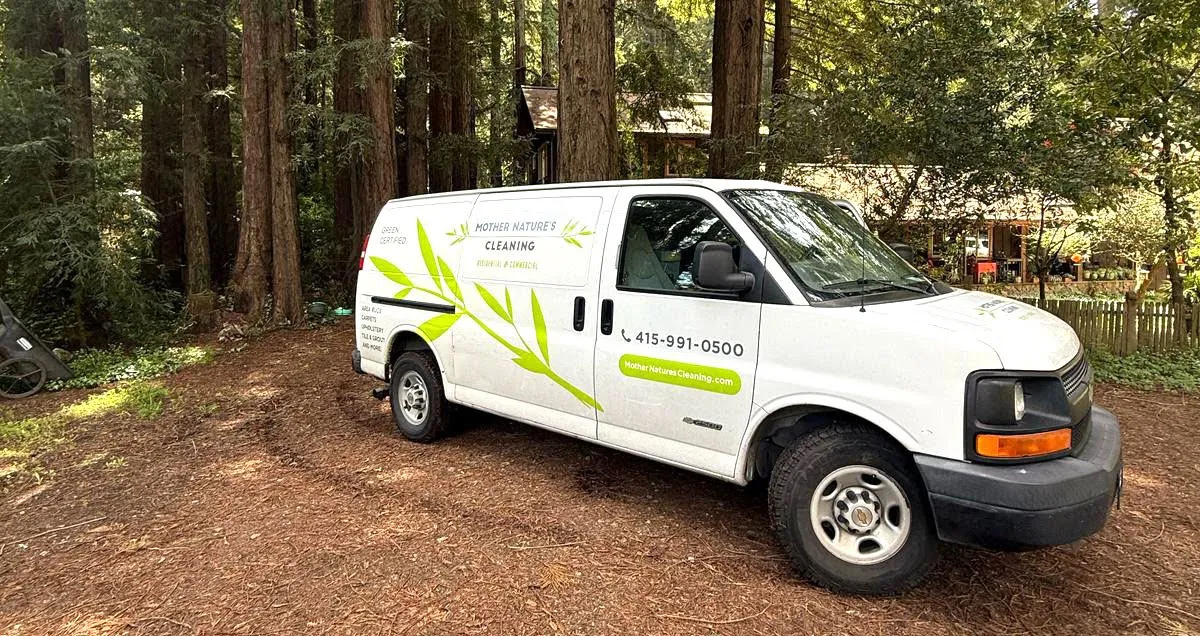
If your clothes need two cycles to dry, the vent is usually why. We clear the full duct run, check how it was installed, and tell you what we find. Homes, condos and townhouses across San Francisco and the Bay Area.
.jpg)
.png)
.png)


A dryer works by pushing hot, wet air out of the house. When lint narrows the duct, that air has nowhere to go, so the moisture stays in the drum and the clothes come out damp.
Most people respond by running another cycle. That doubles the running cost, and it puts the dryer under exactly the load it was never designed for: more heat, less airflow, for twice as long.
The lint trap only catches part of what comes off your clothes. The rest goes into the duct, and it builds up somewhere you can't see or reach.
Clothes still damp after a full cycle, or needing a second one. The laundry room gets noticeably hot while the dryer runs, the outside vent flap doesn't open, or barely moves, when the dryer is on a burning or hot-lint smell during a cycle Lint appearing around the back of the dryer or on the floor behind it, the dryer shutting itself off mid-cycle. More than a year since it was last done
The dryer shutting off on its own is the one to act on quickly. Dryers are built to cut out when they overheat, and a blocked vent is the usual reason it happens.
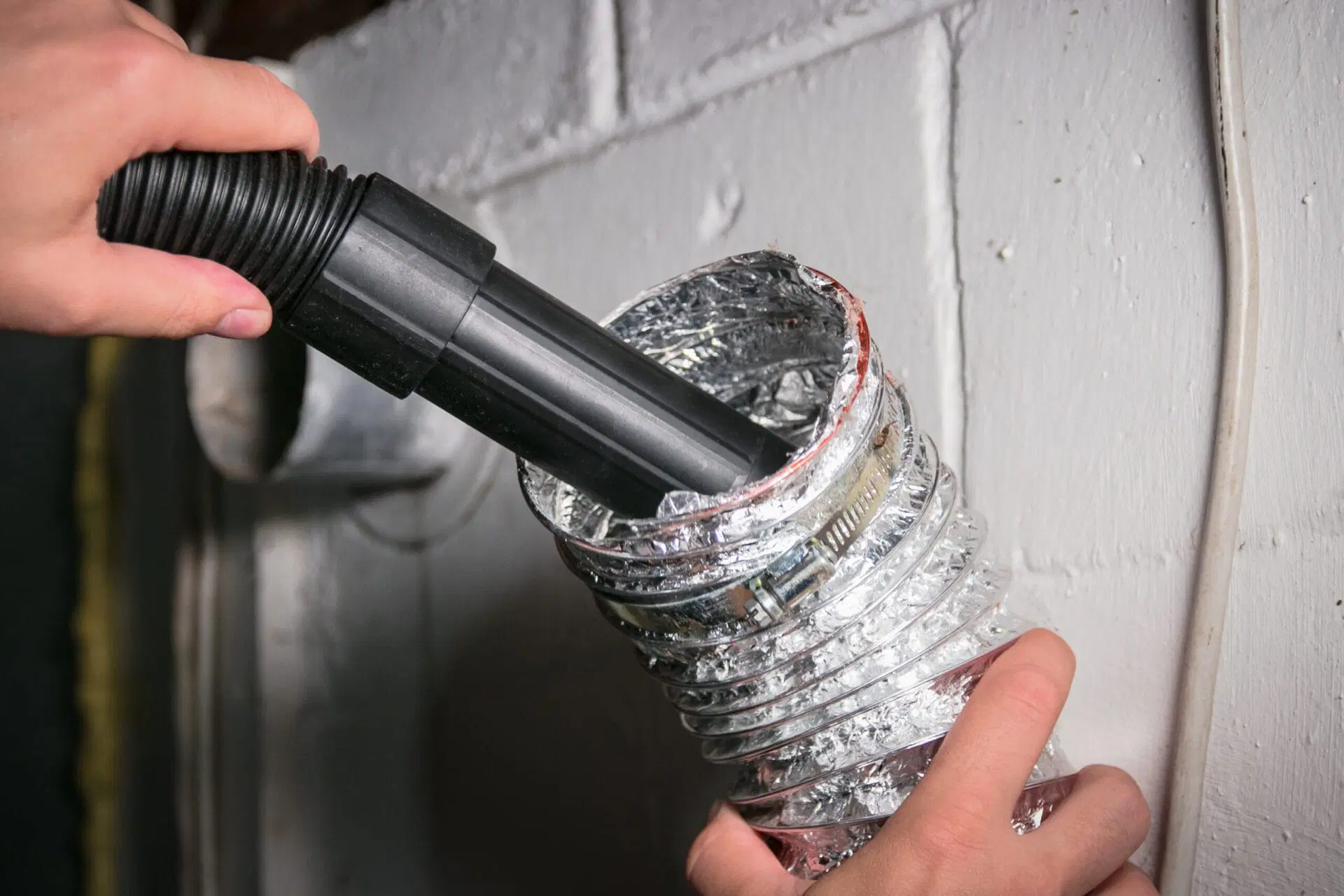
Not just the six feet you can reach from behind the dryer. Blockages are usually further along, at a bend or at the outside vent.
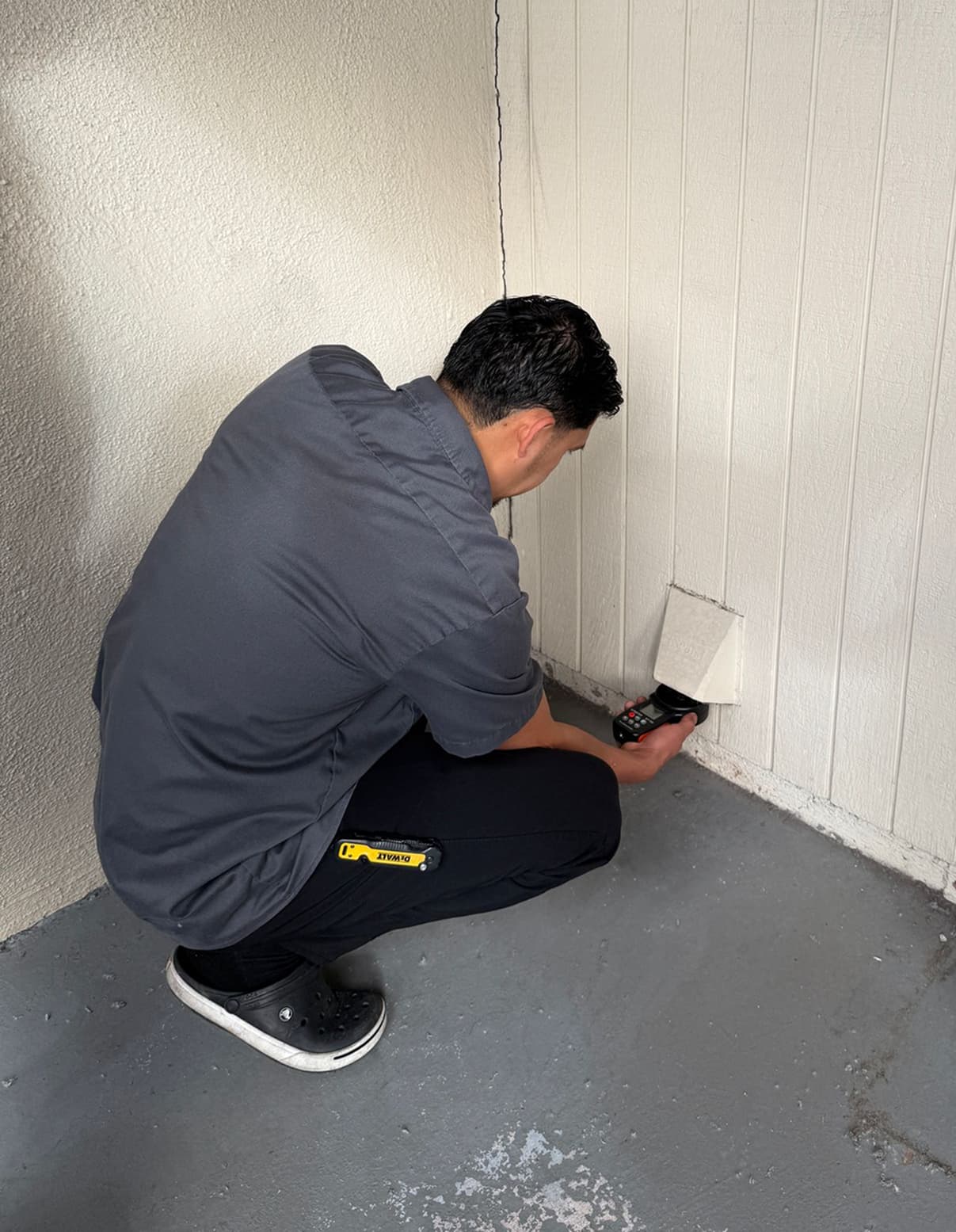
Before and after. It's the only way either of us knows whether the clean actually achieved anything.
Foil duct, a screened outside cover, screws through the duct wall. These are common, and they undo a clean within months.
If your vent doesn't need doing yet, we'll say so and tell you when to book instead.
A vacuum down the duct is the easy part. Most vents that clog again quickly do so because of how they were built, not because nobody cleaned them.
So nobody wastes a phone call.
.jpg)
Worth knowing, because it isn't widely understood.
A gas dryer burns fuel, so its exhaust contains carbon monoxide along with the hot air and lint. As long as the duct is sealed and clear, all of that goes outside. If the duct is blocked, disconnected, or leaking at a joint, some of it can end up in the house instead.
This is why the duct behind a gas dryer matters more than people assume, and why a CO alarm near the laundry area is worth having whether or not you ever call us.
One thing to know before you book: we don't disconnect gas lines. If your dryer can't be reached without that, you'll need a plumber or appliance technician to handle that part first.